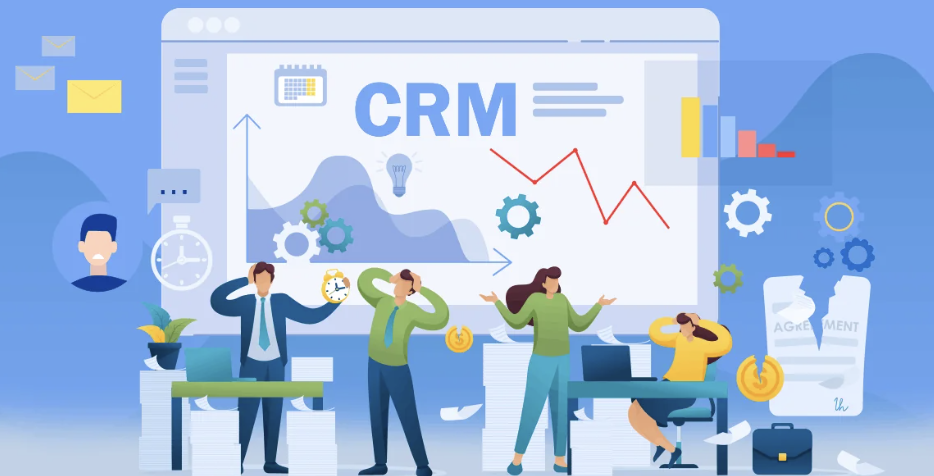
Every year, thousands of freelancers set up a CRM. HubSpot is free, Streak lives inside Gmail, Pipedrive has a clean UI. The onboarding takes 20 minutes. The first week of use feels productive.
Then a busy project hits. The logging stops. Two weeks later, the CRM is already out of date — a ghost of the relationships it was supposed to track. The freelancer stops trusting it, stops using it, and returns to managing client relationships from memory and inbox instinct.
This is not a discipline failure. It is not a product-market fit mismatch. This is the CRM category doing exactly what it was designed to do — for a customer it was never designed to serve.
The case against CRMs for freelancers isn't that they're bad products. It's that they're the wrong tool — structurally, not superficially. And understanding why changes what you look for instead.
Signs your current freelance CRM system is failing you
Before diagnosing the structural problem, check how many of these apply to your current setup for freelancer client management:
- ☐You've searched your inbox for a client's name to remember where you left off
- ☐A lead went cold and you only noticed when they hired someone else
- ☐You have a CRM account you haven't logged into in 30+ days
- ☐You've sent a follow-up that started with "Sorry for the delay..."
- ☐You can't name your three most at-risk client relationships right now
- ☐Your "CRM" is a spreadsheet or a folder of starred emails
If you checked two or more, you're already losing revenue to silence — and a better CRM won't fix it. The checklist items are symptoms of the same root cause.
The data-entry trap: why every freelance CRM gets abandoned
Before we get to freelancers specifically, consider how CRMs perform for their intended users — organizations with dedicated IT departments, training budgets, and CRM administrators whose entire job is making the software work:
These numbers come from organizations with full CRM admin support. A freelancer adopting a CRM for freelancers has none of that infrastructure — and faces every one of those failure modes alone.
The pattern is predictable: initial setup enthusiasm → a week of manual logging → a busy project period where logging stops → a return to a CRM that's already out of date → full abandonment within 30 days. It's not a character flaw. It's the expected outcome of a tool that requires a behavior incompatible with how solo operators actually work.
Nearly half of freelancers spend approximately six hours per week on non-billable administrative work — tracking, invoicing, client communication. That's 300+ hours per year not generating income. A CRM that adds more admin overhead doesn't solve that problem. It is that problem.
Why CRMs fail solo operators: a structural problem, not a software problem
A CRM's core design philosophy is to make existing data visible — to let a manager see where deals are in a pipeline. This is useful when someone else is populating the pipeline. An SDR logs the call. A sales rep updates the stage. A CRM admin runs the dedup. The manager reviews the output.
A freelancer is the SDR, the sales rep, the CRM admin, and the manager — simultaneously, while also doing all the actual client work. A tool that only shows you what you've already entered is circular. It can't surface what you didn't know to log.
“Bad data entry is the #1 cited cause of CRM failure, per Gartner. The root cause is not negligence — it's that manual data entry is a separate job. Sales teams have SDRs to do it. Freelancers have themselves.”
The mechanism of failure is specific. Gartner identifies incomplete and incorrect data entry as the primary driver of CRM failure. Not bad features. Not bad pricing. Bad data — because the people responsible for entering it were too busy doing the actual work that pays their bills.
For a solo operator, this isn't a process problem. It's a physics problem. You cannot sustainably maintain a system that requires continuous manual input while simultaneously delivering client work on deadline. One always wins. The CRM always loses.

See which clients you've been neglecting
Connect your inbox in 60 seconds. 10xMinds reads every client thread, surfaces who's gone cold, and writes the follow-up — no data entry, no setup, no new tab to forget about.
Connect my inbox freeNo credit card required · Cancel any time
The CRM-by-CRM breakdown: what freelancers actually encounter
These are the tools freelancers most commonly try before concluding that a CRM for freelancers doesn't work. Each illustrates a specific dimension of the structural failure.
HubSpot Free
The false-confidence trap
The free tier is real and the brand is trusted, so freelancers set it up and think they've solved the freelancer client management problem. They haven't. No inbox awareness, no at-risk detection, no follow-up automation — all locked behind the Professional tier at $800–$890/month plus a mandatory $3,000 onboarding fee. A freelancer who sets up HubSpot's free tier has organized the problem into a more expensive interface. See how it compares: 10xMinds vs HubSpot for freelancers →
Streak Gmail CRM
Lives in Gmail — still misses everything
Streak has 750,000+ users, mostly freelancers and solopreneurs, which confirms the demand signal. But Streak only tracks emails you send through its mail merge — not organic client threads. It has no inbox awareness, no at-risk detection, no follow-up automation, and no mobile app. It requires the freelancer to do all the cognitive work. And at $49–$69/user/month, it charges enterprise prices for a CRM for freelancers that solves nothing automatically. Full comparison: 10xMinds vs Streak for freelancers →
Salesforce
Built for teams with CRM admins
Salesforce starts at $25/user/month and requires dedicated data entry to function — the exact behavior freelancers won't sustain. It was designed for sales teams with SDRs and CRM admins to populate it. A solo operator is expected to be the salesperson, the delivery team, and the CRM administrator simultaneously. The math doesn't work. Full breakdown: 10xMinds vs Salesforce for freelancers →
Pipedrive
Makes the pipeline visible; doesn't make follow-up happen
Better on price ($24/month) but the follow-up automation is basic and there are no freelance-specific cadence templates. A freelancer still has to notice the silence, decide to act, and write the email. Pipedrive shows you what you've already logged. It can't surface what you forgot to log.
Every tool in this list shares the same structural flaw: they require the freelancer to already know what they need to do, then provide a place to record that they did it. None of them watch the inbox, surface relationships that are going cold, and hand the freelancer a ready-to-send draft. The gap is not a feature gap — it's an architectural gap.
What freelancers actually need (and what no CRM provides)
The core follow-up gap for freelancers isn't about pipeline visibility. It's about proactive detection of which relationships are cooling — and taking action before the client moves on.
Up to 90% of potential freelance revenue is left on the table because freelancers fail to follow up with interested clients. CRMs don't close this gap. They require the freelancer to already know who to follow up with, decide to act, open the CRM, find the contact, and write the email. Every step is a place the behavior breaks down — and it breaks down because that entire chain of actions requires cognitive bandwidth that freelancers don't have to spare.
80% of sales require five or more follow-ups to close, but most freelancers stop after one. That means the vast majority of warm leads — people who expressed interest but weren't ready to hire immediately — are being abandoned at exactly the moment they need nurturing. No CRM for freelancers fixes this without the freelancer doing all the cognitive work themselves.
“CRMs are inspection tools, not improvement tools. They show you what you've already entered. For a freelancer who is simultaneously the manager, the salesperson, and the delivery team, a tool that only reflects logged data is circular — it can't surface what you didn't know to log.”
What freelancers actually need is a system that does the detection automatically — one that reads the inbox they already use, notices when a relationship has gone quiet, and generates the follow-up draft from the actual thread context. That's not a better freelance CRM. That's a fundamentally different category of tool.
How 10xMinds replaces a CRM — inbox-first, zero setup, no data entry
The unlock is removing the input requirement entirely. Your inbox is already a complete record of every client relationship you've had. Every thread, every proposal, every silence — it's all there. The question is whether anything is reading it.
Two things became true in 2024 that make this technically solvable for freelancer client management:
- ✓LLMs can read an email thread and produce a contextually accurate follow-up draft that sounds like the sender — not a template, a real draft based on the actual conversation history. This is what follow-up automation looks like when it works.
- ✓Email parsing APIs can monitor an inbox in real time without requiring the user to log anything. The system reads; the freelancer does nothing until there's a draft ready to send.
The practical outcome: you connect Gmail or Outlook once at 10xMinds. The system reads your inbox, identifies which client relationships have gone quiet and for how long, scores relationship health, and surfaces the three contacts most at risk of going cold — each with a ready-to-send draft written from the actual thread context.
No data entry. No pipeline to maintain. No reminders to set. The follow-up happens because the system detected the silence, not because you remembered to check a dashboard.
Best CRM for freelancers vs. 10xMinds: the honest comparison
The temptation when describing inbox-first relationship management is to call it a “CRM for freelancers.” It's not. A CRM is a database you populate manually so a manager can inspect pipeline state. This is different in every meaningful dimension:
| Traditional CRM | 10xMinds | |
|---|---|---|
| Input model | Manual data entry | Reads your inbox automatically |
| Detects silence | No — you have to notice | Yes — flags at-risk contacts |
| Follow-up automation | No — blank text field | Yes — AI draft from thread context |
| Setup time | 20–60 min + ongoing logging | Under 5 min, no ongoing work |
| Designed for | Sales teams with CRM admins | Solo freelancers with full inboxes |
| Fails when | You stop logging (week 2) | Doesn't require logging — doesn't fail |
| Monthly cost | $25–$890+ | $29–$49 |
The difference isn't marketing positioning. It's the fundamental assumption about where the work happens. A CRM assumes a human will decide to log things. An inbox-first system assumes humans won't — and builds from there.
For freelancers, that assumption is the only one that survives contact with reality.
The ROI argument: one recovered project pays for a year
The financial case for switching is simple. If a freelancer billing $5,000–$10,000/month is losing even one warm lead per month to silence — conservatively a $1,500–$3,000 project — that's $18,000–$36,000 in recovered revenue per year from a tool that costs $29–$49/month.
Compare that to the economics of a freelance CRM: $25–$890+/month, 20+ minutes of setup, and ongoing cognitive overhead to keep it accurate — for a tool that still requires the freelancer to notice the silence, decide to act, and write the email themselves.
The math isn't close. And unlike a CRM — which gets less useful the less you log — an inbox-first system gets more accurate over time as it learns the patterns of your specific client relationships.
The verdict: stop looking for a better CRM for freelancers
If you've tried a CRM and abandoned it, you weren't undisciplined. You were using a tool designed for a completely different job — one that requires a dedicated support infrastructure you don't have, sustained by a behavior (continuous manual logging) that is structurally incompatible with how solo operators work.
The question isn't which CRM to try next. The question is whether the tool you use for freelancer client management needs you to feed it, or whether it reads your inbox and acts on its own.
One of those tools is a CRM. The other is what comes after.
Frequently asked questions
Why don't CRMs work for freelancers?
CRMs require continuous manual data entry — logging contacts, updating pipeline stages, writing notes after every interaction. Sales teams have SDRs who do this full-time. Freelancers don't. When a busy project hits, the logging stops, the CRM goes stale, and abandonment follows within 30 days. It's not a discipline failure — it's a structural mismatch between the tool's requirements and how solo operators actually work.
What's the best CRM alternative for freelancers?
The best alternative is an inbox-first, zero-entry relationship management tool — one that reads your Gmail or Outlook automatically, surfaces which clients have gone quiet, and writes the follow-up draft for you. 10xMinds connects to your existing inbox in under 5 minutes, requires zero ongoing data entry, and flags at-risk client relationships before they go cold.
Do freelancers need a CRM?
Freelancers need the outcome a CRM promises — consistent follow-up, no clients falling through the cracks — but not the CRM model itself. Traditional CRMs require manual data entry that freelancers consistently abandon within weeks. What freelancers actually need is a system that watches their inbox automatically, detects silence, and takes action without requiring the freelancer to maintain a separate database.
How do I manage clients without a CRM?
Connect an inbox-aware tool like 10xMinds to your Gmail or Outlook. It reads every client thread, scores relationship health, surfaces contacts who haven't replied in 30+ days, and generates follow-up drafts from the actual conversation context — no data entry, no setup beyond the initial inbox connection.
Related reading
Why Freelancers Lose Clients to Silence (And How to Stop It)
The Follow-Up Formula: How Many Touches It Actually Takes
10xMinds vs Salesforce for Freelancers
10xMinds vs HubSpot CRM for Independent Contractors
10xMinds vs Streak Gmail CRM for Freelancers
See which clients you've been neglecting — connect your inbox in 60 seconds
No data entry. No CRM to maintain. 10xMinds reads your inbox, surfaces the clients who've gone quiet, and writes the follow-up in your voice — zero setup, zero admin overhead.
Connect my inbox free7-day free trial · No credit card required · Cancel any time · View pricing